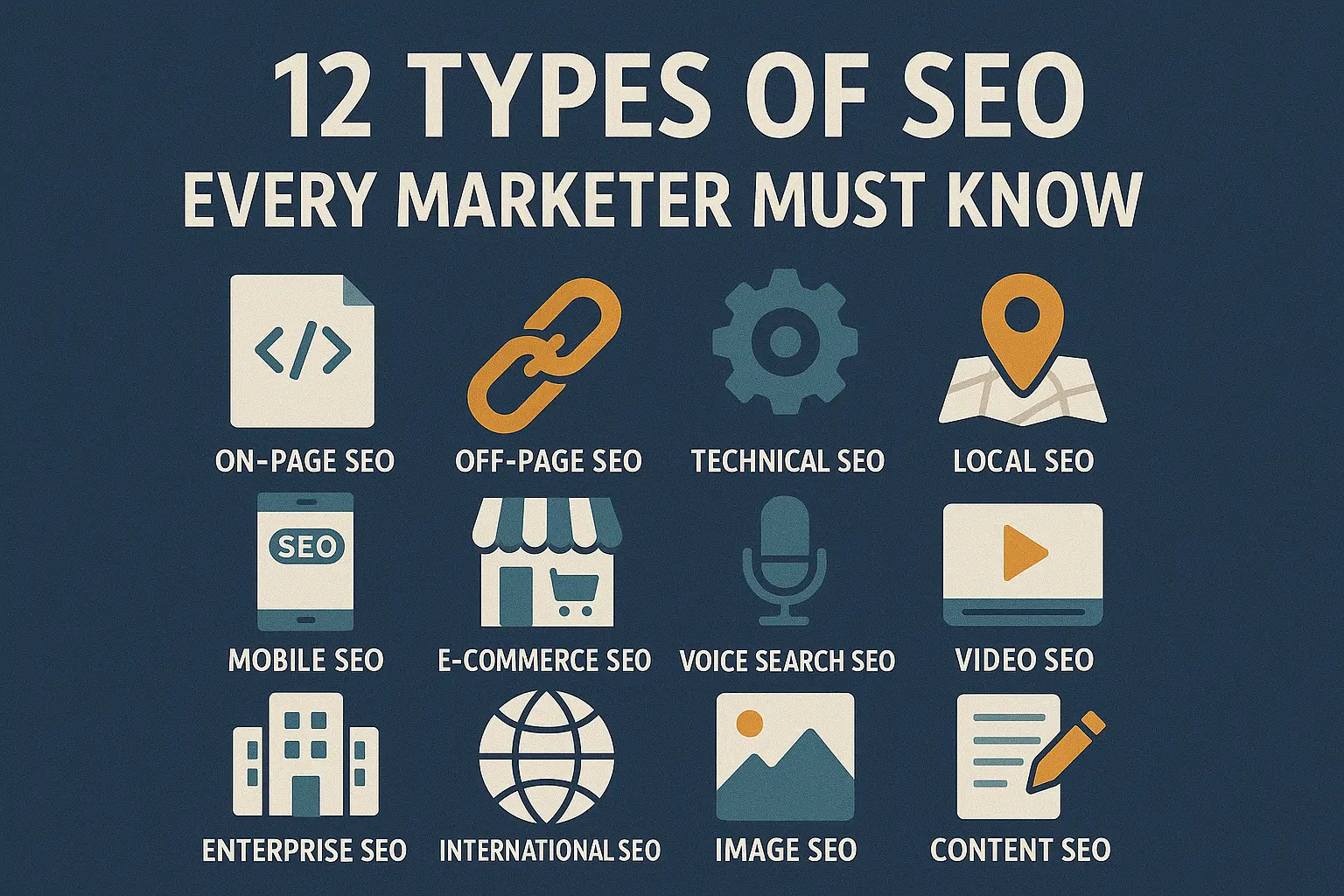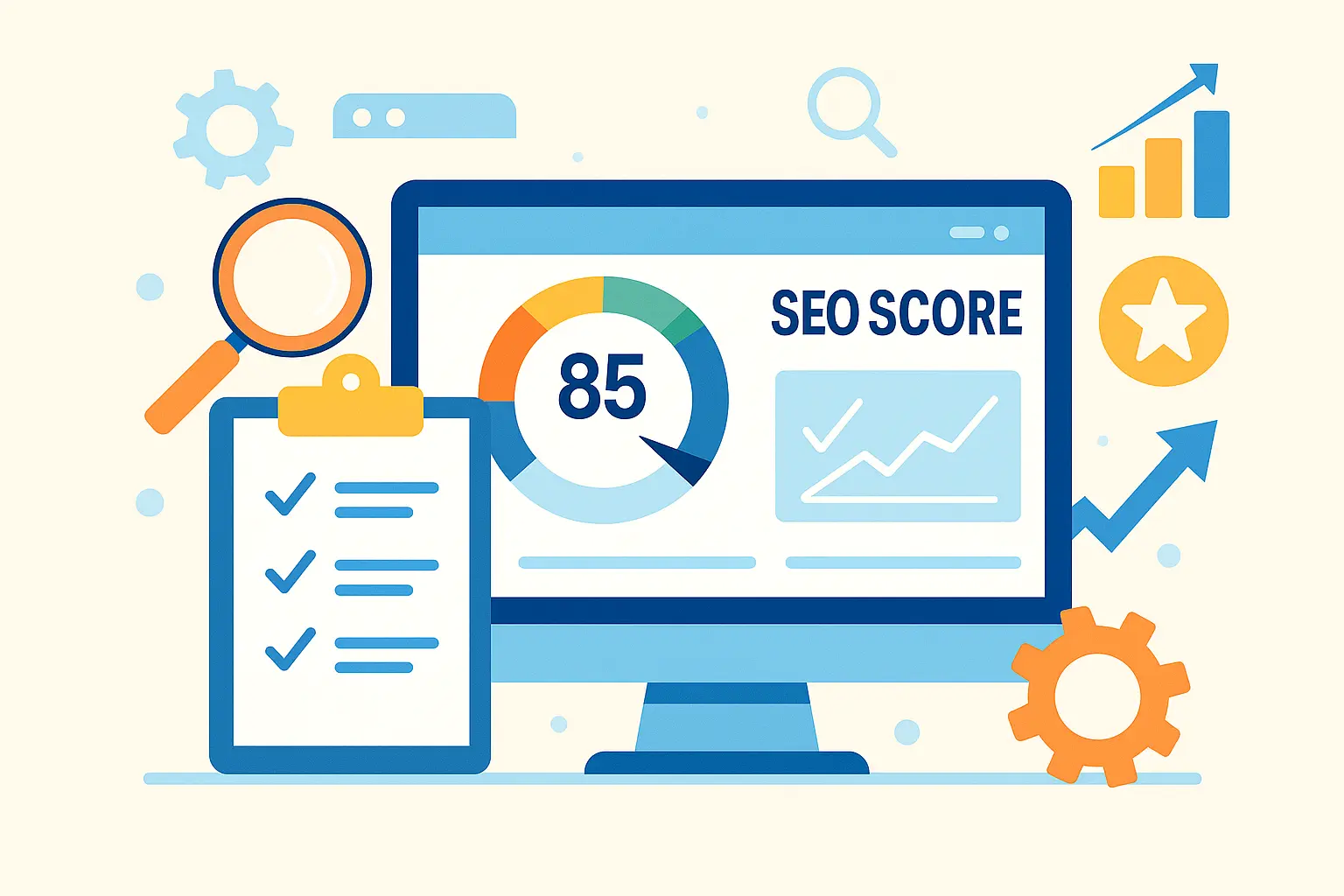
Learn how SEO tools calculate an SEO Score, what it truly means, and which website factors impact it most. Understand scoring systems and how to improve your SEO performance.
In today’s digital world, every website owner has seen some version of the term “SEO Score.”
Whether you use a free SEO checker, online audit tool, or marketing software, you’ve probably been shown a number — often between 0 and 100 — representing how “optimized” your website is.
But what does this number really mean?
How do tools calculate it?
And most importantly: Does your SEO Score actually affect your Google rankings?
This article breaks down the truth behind SEO scoring systems, how they work, what they measure, and how you should use them to improve your website’s performance.
🌐 1. What Is an SEO Score?
An SEO Score is a numerical evaluation of a website’s overall search engine optimization health.
It’s a simplified measurement created by SEO tools to help website owners understand:
- How well their pages follow SEO best practices
- Which issues need attention
- How their website compares to competitors
- How technically healthy and optimized their site is
Important point:
Google does NOT use any “SEO score” to rank websites.
These scores are created by tools, not by search engines.
However…
A high SEO Score usually means your site follows many recommended ranking practices — which indirectly helps you rank better.
2. What Does an SEO Score Include?
While every SEO tool uses its own formula, most SEO Scores are based on four major categories:
2.1 Technical SEO
This includes all structural and backend elements that affect crawling, indexing, and performance.
Common factors:
- Page speed (Core Web Vitals)
- Mobile usability
- Broken links
- Crawl errors
- Redirect chains
- HTTPS and security
- XML sitemap issues
- Robots.txt configuration
- JavaScript rendering problems
These are critical because if search engines cannot easily crawl your site, you cannot rank well.
2.2 On-Page SEO
This category focuses on optimization of individual pages.
It includes:
- Title tags
- Meta descriptions
- Headings (H1, H2, H3)
- Keyword usage
- Readability
- Content structure
- Internal linking
- Image optimization (ALT text, size, format)
On-page SEO is often where website owners lose the most points.
2.3 Content Quality
Many tools now use content scoring systems driven by:
- Keyword relevance
- Semantic depth (supporting keywords)
- Search intent alignment
- Freshness
- Duplicate content issues
- Thin content
- Engagement signals (bounce rate, dwell time)
Content is still the heart of SEO, so a poor content score lowers your total SEO Score significantly.
2.4 Off-Page SEO
Not all tools measure this, but some include factors like:
- Backlink authority
- Domain trust
- Brand visibility
- Social signals
Because off-page signals are harder for tools to analyze accurately, many SEO scoring systems focus mainly on technical and on-page factors instead.
3. How Tools Actually Calculate an SEO Score
Every SEO tool uses a slightly different formula, but the calculation typically follows these steps:
Step 1: Crawl Your Website
The tool scans your site the way a search engine crawler would, checking for:
- Page count
- Errors
- Speed issues
- Indexing problems
- Missing or invalid tags
Step 2: Analyze SEO Factors
Each factor is given a weight based on importance.
For example:
- Broken links = high impact
- Missing ALT text = medium impact
- Minor readability issues = low impact
Each issue either subtracts points or adds negative weight.
Step 3: Score Each Category Separately
Many tools give separate scores for:
- Technical SEO
- On-page SEO
- Content
- Usability
- Backlinks
Then they combine these into one final score.
Step 4: Normalize the Score (0–100 or A–F)
To make results easy to compare, tools convert their internal score into a simple rating.
Examples:
- 90–100: Excellent
- 70–89: Good
- 50–69: Needs improvement
- 0–49: Poor
4. The Most Important Factors That Influence SEO Score
Here are the elements that carry the highest weight across most SEO scoring systems:
4.1 Page Loading Speed
Slow websites lose the most SEO points. Tools look at:
- LCP
- CLS
- INP
- TTFB
- Render-blocking resources
- Image size problems
4.2 Mobile Optimization
Because Google uses mobile-first indexing, mobile issues drastically lower your SEO Score.
4.3 Missing Meta Tags
A missing or duplicate:
- Title
- Meta description
- H1 tag
…can significantly hurt your score.
4.4 Broken or Redirecting Links
404 errors, redirect chains, and outdated URLs hurt both technical SEO and user experience.
4.5 Duplicate or Thin Content
Tools penalize:
- Pages with low word count
- Pages that repeat the same content
- Multiple URLs with the same content
- Missing canonical tags
4.6 Crawlability & Indexing Issues
Common problems:
- Blocked pages
- Orphan pages
- Incorrect robots.txt
- Disallowed important pages
- Multiple indexable versions of the same page
4.7 Missing Structured Data
SEO tools reward sites that include Schema markup for:
- Articles
- FAQs
- Products
- Breadcrumbs
- Reviews
Structured data increases your chances of rich snippets.
5. Why Your SEO Score Might Be Low
Even well-designed websites sometimes get low SEO Scores because of:
- Heavy scripts
- Poor hosting
- Templates with duplicate content
- Oversized images
- Multiple versions of the same URL
- Lack of internal links
- Inconsistent meta data
- Ignoring mobile performance
The good news?
Most issues are easy to fix once you know what’s wrong.
6. Does a High SEO Score Mean High Google Rankings?
No — but it helps.
Google does NOT check your “SEO Score.”
Tools created it as an educational indicator only.
However…
A high SEO Score means your website:
- Loads fast
- Has fewer errors
- Has optimized content
- Follows technical best practices
- Is easier for Google to crawl
These things do improve your chances of ranking higher.
So while the score itself doesn’t rank you…
The quality signals behind the score absolutely do.
7. How to Use SEO Score the Right Way
❌ Don’t:
- Obsess over a perfect 100 score
- Focus only on what the tool shows
- Ignore real-world performance
- Treat the score as a Google ranking metric
✔️ Do:
- Use the score as a health indicator
- Fix important errors first
- Compare your score with competitors
- Improve categories that matter most
- Re-run audits regularly
SEO Score is a guide, not a goal.
8. SEO Score vs. Real SEO Performance
SEO Score = What tools think your website should be doing
Real SEO = How your website performs in real search results
Focus more on:
- Rankings
- Click-through rate (CTR)
- Search visibility
- Traffic growth
- User engagement
These matter far more than any automated score.
Conclusion: What an SEO Score Really Means
An SEO Score is a useful indicator of your website’s optimization level — but not a direct ranking factor. It gives you a quick snapshot of:
- Technical health
- On-page optimization
- Content quality
- Mobile and speed performance
Use SEO Scores to identify problems, improve your site, and track progress over time — but always combine them with human judgment, real ranking data, and user experience insights.
When used correctly, SEO Scores are powerful tools that guide your optimization strategy, helping you build a stronger, faster, and more search-friendly website.